



If you are a minority business owner, you may want to consider becoming officially certified as a minority-owned business. Corporations, the federal government, and state agencies often prioritize partnerships with minority-owned companies. Becoming certified as a minority-owned business may allow you to access certain government and private-sector programs that may be able to help support your business growth.

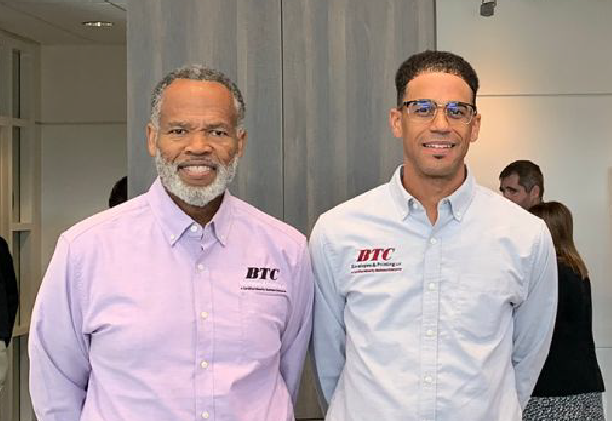
Andrew Magnus, Owner/President of the successful BTC Envelopes and Printing, LLC, shares why he received a minority-owned business certification.
“I only knew one minority business owner. A big part of my push was to create a greater minority presence in a multi-billion dollar industry.” Magnus grew his company using his minority-owned business certification to target companies and institutions with a diversity spend initiative.
If you're not certified, you may be missing out on things like marketing opportunities or access to a reduced-competition contract.
What is a minority owned business?
To be certified as a minority-owned business, a company must be 51% or more owned, operated, and controlled by at least one U.S. citizen whose ethnic background is a minimum of 25% Asian-Indian, Asian-Pacific, Black, Hispanic, or Native American.
Types of minority owned business certification
Here’s information on three types of certification available for qualified businesses: federal government certification, private sector certification, and state and local agency certification.
Federal government certification
To help minority owned businesses thrive in the public sector, the Small Business Administration has a program for ‘socially and economically disadvantaged’ businesses, which minority-owned businesses are typically classified as. The program is referred to as the 8(a) Business Development Program.
The Code of Federal Regulations defines ‘economically disadvantaged’ as ‘socially disadvantaged individuals whose ability to compete in the free enterprise system has been impaired due to diminished capital and credit opportunities as compared to others in the same or similar line of business who are not socially disadvantaged.’
To be eligible for the 8(a) Business Development Program, a small business must:
- Be classified as “small” by SBA standards at the time of application and throughout the 9-year program term. To check if your business qualifies as a small business for government contracting purposes, click here.
- Have not participated in the 8(a) program
Be at least 51% unconditionally and directly owned and controlled by U.S. citizens who are socially disadvantaged individuals and considered economically disadvantaged. - Show potential for success and have the necessary financial capacity to perform on federal contracts successfully.
- Demonstrate “good character”
- Not owe any outstanding federal financial obligations
- Be owned by someone whose personal net worth is $250,000 or less
- Be owned by someone whose average adjusted gross income for three years is $250,000 or less
- Be owned by someone with $4 million or less in assets
- Show potential for success and be able to perform successfully on contracts
How to get certified for the 8(a) Business Development Program:
To get certified, you first need a profile at SAM.gov. From there, you’ll provide your business information on the My SBA website. If you’re accepted into the program, you will receive a letter from the SBA to let you know whether your application was approved or denied.
Private sector certification
The National Minority Supplier Development Council (NMSDC) has programs for minority-owned businesses that want to connect with companies in the corporate world.
Once approved, your business will be listed as an MBE in the regional and national Minority Supplier Databases. The NMSDC has an extensive list of corporate members and private-sector companies that your business may be able to connect with to win contracts.
To meet the NMSDC’s criteria for certification, minority businesses must be at least 51% minority-owned, operated, and controlled by:
- A U.S. citizen whose origins are from India, Pakistan, or Bangladesh.
- A U.S. citizen whose origins are from Japan, China, Indonesia, Malaysia, Taiwan, Korea, Vietnam, Laos, Cambodia, the Philippines, Thailand, Samoa, Guam, the U.S. Trust Territories of the Pacific or the Northern Marianas.
- A U.S. citizen who is of African descent.
- A U.S. citizen of true-born Hispanic heritage, from any of the Spanish-speaking areas of the following regions: Mexico, Central America, South America and the Caribbean Basin only. Brazilians (Afro-Brazilian, indigenous/Indian only) shall be listed under Hispanic designation for review and certification purposes.
- A person who is an American Indian, Eskimo, Aleut, or Native Hawaiian, and regarded as such by the community of which the person claims to be a part. Native Americans must be documented members of a North American tribe, band, or otherwise organized group of native people who are indigenous to the continental United States, and proof may be provided through a Native American Blood Degree Certificate (i.e., tribal registry letter, tribal roll register number).
In addition, the business must:
- Be a profitable enterprise and physically located in the U.S. or its trust territories.
- Show that management and daily operations are exercised by the minority ownership member(s).
How to get certified by the NMSDC:
If you want to be a certified minority-owned business, you may apply for certification at the National Minority Supplier Development Council (NMSDC). The process begins with contacting the regional affiliate closest to your business’s headquarters.
- Make sure your business qualifies according to the certification criteria.
- Gather required documentation, including business history, organizational documents, and a completed online application. An application fee must be paid online via credit card. Processing of your application does not begin until payment is received.
- Upload the required documentation via the online certification application.
- Schedule a site visit and interview.
The certification process may take up to 90 days. You will be notified via e-mail if approved. If your application is rejected, you may submit an appeal letter.
State and local agency certifications
To participate in the MBE programs in your state, you will need to apply at the regional office closest to your business headquarters. Find links to state- and locally-sponsored MBE and DBE programs here.
Benefits of becoming certified as a minority business owner
Building a sense of community
Becoming a certified minority-owned business opens up new networks of people who want you to succeed. You’ll meet fellow business owners, interact with large companies, and participate in employee resource groups.
Landing unlikely contracts
Major companies go to great lengths to do business with minority-owned certified businesses, with some legally obligated to. Your certification may help level the playing field when competing for contracts.
Increased marketing opportunities
If you receive the certification, announce it far and wide with a press release, website messages, email campaigns, and other marketing materials. You may benefit especially if your business is located in a minority community.
Access to government contracts
Access to and eligibility for government contracts is a great benefit for certified businesses. Federal, state, and local governments often mandate that at least some percentage of business goes to qualified minorities.
Setting Yourself Apart
Having this certification shows that you’re proud of your status and interested in growing your business. This is a good message to spread to both current and potential clients and customers. Being apart from the crowd helps open up more opportunities.
FAQs
What qualifies a business as minority-owned?
Generally, a minority-owned business is at least 51% owned, operated, and controlled by individuals who belong to a qualifying minority group. However, eligibility requirements may vary by certifying organization and program. Some certifications are offered by state or local governments, while others are available through private organizations or agencies. Before applying, review the specific ownership, control, residency, and documentation requirements for the certification you want.
How much does MBE certification cost?
The cost of Minority Business Enterprise (MBE) certification depends on the organization administering the program. Some government-sponsored certification programs are free, while others charge application or processing fees. Private certification organizations may have their own fee structures. Because costs sometimes change and requirements vary by location, check the current fees with the specific certifying agency before submitting an application.
How long does minority business certification take to process?
Processing times may vary depending on the certification program, the completeness of your application, and whether the certifying organization needs additional information. Applications with complete and accurate documentation generally move more smoothly than those requiring multiple follow-up requests. It's a good idea to apply well before you need the certification for a contract, supplier opportunity, or government procurement program.
What is the difference between MBE certification and the SBA 8(a) program?
MBE certification and the SBA 8(a) Business Development Program are separate programs with different eligibility requirements and purposes. MBE certification generally establishes that a business meets a particular organization's criteria for minority ownership and control, often helping businesses compete for supplier and contracting opportunities. The SBA 8(a) program is a federal business development program for eligible socially and economically disadvantaged small businesses and includes business development assistance as well as federal contracting opportunities. Meeting the requirements for one program doesn't automatically qualify a business for the other.
Can a business hold both MBE and 8(a) certification at the same time?
Yes, a business may be able to hold MBE certification while participating in the SBA 8(a) program if it meets the eligibility requirements for both. The programs serve different purposes, so one certification generally doesn't replace the other. However, businesses should review each program's current requirements and application procedures rather than assuming that approval under one program guarantees eligibility for another.
What documents do I need to apply for minority business certification?
The exact documentation varies by certifying organization, but applicants commonly need to provide business formation documents, ownership records, tax returns, financial information, government-issued identification, business licenses, and information demonstrating who manages and controls the company. Some programs may request additional documentation related to the owner's background, residency, or business operations. Providing complete and consistent records may help prevent unnecessary delays during the certification review.